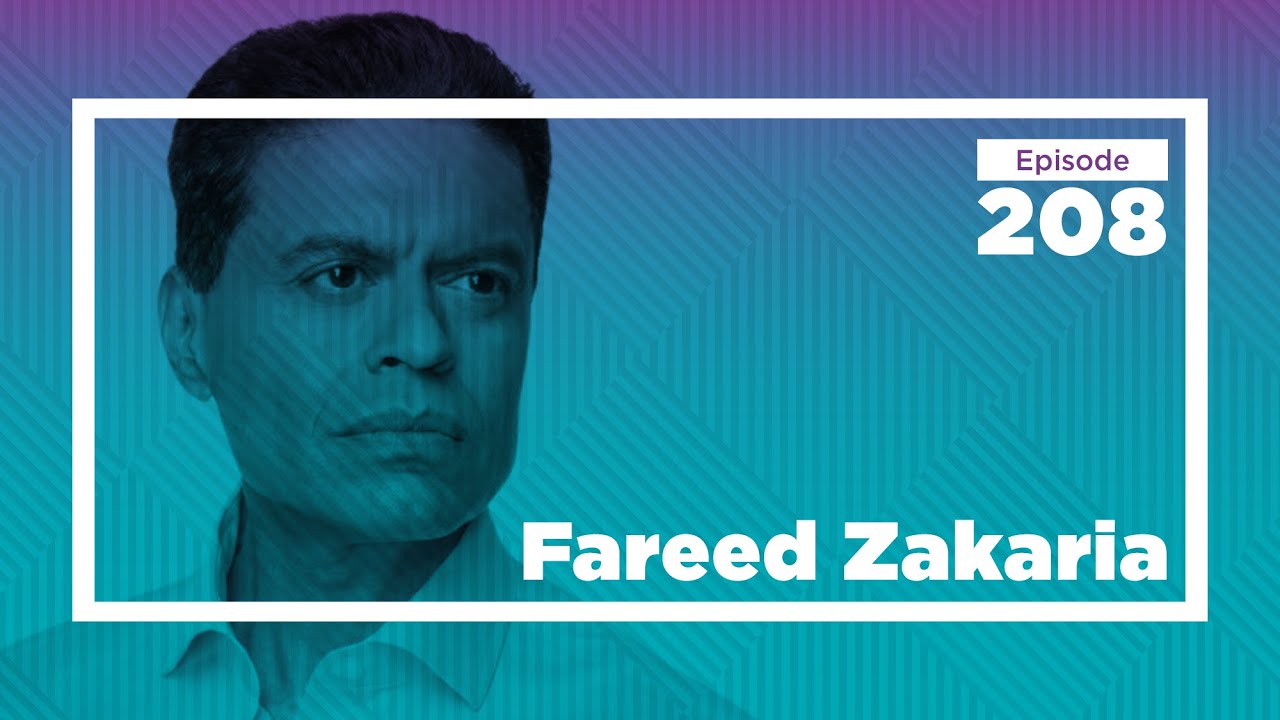
Fareed Zakaria on the Power of Ideas, and the Rewards of Intellectual | Conversations with Tyler
SUMMARY:
Tyler Cowen converses with Fareed Zakaria about his new book “Age of Revolutions: Progress and Backlash from 1600 to the Present,” discussing Zakaria’s influences, ideas, and insights on various topics.
IDEAS:
- Fareed Zakaria credits Hushan Singh for instilling a love of language and writing.
- Intellectual curiosity and broad reading habits marked Zakaria’s early years.
- Zakaria’s father chose secular democracy over religious nationalism in India.
- The Soviet Union’s rapid industrialization influenced Indian socialist leanings.
- The Anglican Book of Common Prayer taught Zakaria reverence for tradition.
- Zakaria grew up speaking Hindi and Urdu, reflecting India’s linguistic diversity.
- Partition of India is viewed as a loss of cosmopolitanism and diversity.
- Mumbai remains India’s most cosmopolitan city, reflecting its diverse population.
- Indian Muslims’ lack of radicalization is attributed to India’s syncretic nature.
- Zakaria learned political skills and the challenges of politics at Yale.
- The “Clash of Civilizations” essay by Huntington was published under Zakaria.
- Zakaria’s Newsweek essay post-9/11 explored Arab world’s failed modernization.
- Oil wealth is seen as a barrier to modernization in Middle Eastern countries.
- Singapore’s lack of corruption is attributed to institutionalized best practices.
- Classical liberalism is under threat from various populist and illiberal forces.
- The Dutch Golden Age is considered the start of modern politics and economics.
- China and India’s historical GDP size is misleading regarding modern progress.
- Writing online wine reviews for Slate was an attempt to engage non-wine drinkers.
- Television offers a platform for impactful communication despite constraints.
- Zakaria balances fame with a fulfilling personal life focused on family and friends.
INSIGHTS:
- Early exposure to intellectual figures can profoundly shape one’s passion for knowledge.
- Socio-political ideologies can be deeply influenced by historical alliances and economics.
- Cultural practices often stem from structural and institutional decisions, not just heritage.
- The rise of identity politics post-Cold War reflects a retreat to traditional affiliations.
- Modernity’s success has led to disruptive changes, fueling populist backlash globally.
- Historical economic statistics must be contextualized to understand true progress.
- Media visibility offers opportunities for influence but requires careful time management.
- Personal relationships and grounded values remain central in a life of public engagement.
QUOTES:
- “He gave me this real love of the language and love of poetry that I still have to this day."
- "I’ve always been intellectually very curious… I get fascinated by ideas."
- "My father chose Nehru’s vision of secular democracy as the foundation of a nation."
- "The whole generation of Indians… were imbued with… a symbiosis because these were your friends."
- "The central message of Christianity… be nice to the people who have been less fortunate than you."
- "Political elites love the idea that political elites get to direct the economy."
- "The first shall be last and the last shall be first in the Kingdom of Heaven."
- "I think that culture is a very big grab bag… you can always find something that explains either failure or success."
- "The most important thing you can do is to try and write books that make a difference."
- "I’ve tried to stay honest with myself… be the best representation I can of myself.”
HABITS:
- Zakaria cultivated an early habit of reading broadly beyond his peers’ scope.
- Engaging with influential figures shaped his intellectual development and writing skills.
- Maintaining intellectual curiosity has been a lifelong pursuit for Zakaria.
- Actively participating in political debates honed his argumentative skills at Yale.
- Writing books is considered the most significant and challenging endeavor for him.
- Balancing media presence with personal life is a conscious effort for Zakaria.
- Prioritizing family and close friends over fame-driven social networks is key.
- Reflecting on personal roles, especially as a father, is part of his routine self-assessment.
- Staying grounded in gratitude for opportunities and luck shapes his daily perspective.
- Managing time effectively to accommodate professional and personal commitments is crucial.
FACTS:
- Hushan Singh was considered the most famous journalist in India about ten years ago.
- The Dutch Golden Age marked the first instance of modern politics and economics.
- China and India had the largest economies circa 1800 due to their large populations.
- The Left Right political divide originated from seating arrangements during the French Revolution.
- Singapore combats corruption by paying bureaucrats close to market wages.
- The West has been significantly more advanced than the rest of the world since the 16th century.
- The British preference for Bordeaux wines was influenced by tariff policies, not culture.
- Dubai, with minimal oil wealth, has become the most modern city among Gulf States.
- Iran’s struggle with modernization is partly due to oil wealth impeding societal progress.
- The rise of Western modernity coincides with significant advancements in science and industry.
REFERENCES:
- “Age of Revolutions: Progress and Backlash from 1600 to the Present” by Fareed Zakaria
- The Illustrated Weekly of India, where Zakaria’s mother worked
- George Orwell, writer who influenced Zakaria
- Henry Kissinger’s memoirs, which Zakaria read at age 14
- The Anglican Book of Common Prayer
- Tom Holland’s book “Dominion”
- Yale Political Union, where Zakaria honed his debate skills
- Samuel Huntington’s essay “The Clash of Civilizations”
- Newsweek, where Zakaria wrote post 9/11 essay
- Slate, where Zakaria wrote online wine reviews
RECOMMENDATIONS:
- Cultivate intellectual curiosity by reading broadly across various subjects and genres.
- Engage with mentors who can instill a passion for language, writing, and ideas.
- Explore historical influences on current socio-political ideologies for deeper understanding.
- Recognize the role of identity politics in shaping global conflicts post-Cold War.
- Cherish classical liberalism to preserve progress in human history against populist threats.
- Contextualize economic statistics within historical frameworks for accurate analysis.
- Balance media visibility with personal life to maintain authenticity and relationships.
- Embrace opportunities while staying grounded in gratitude and personal values.
- Prioritize family and close friendships over transient fame-driven connections.
- Manage time effectively to fulfill professional ambitions without neglecting personal life.