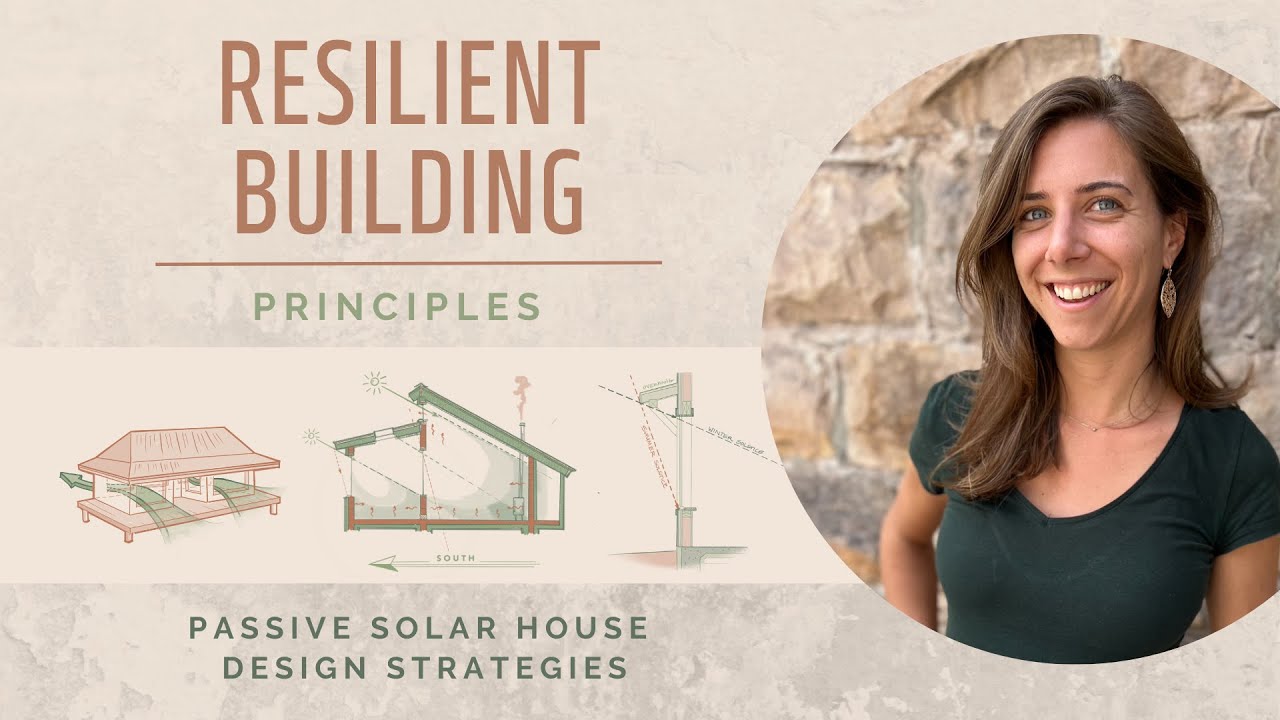
Passive Solar House Design: Resilient Building Design Principles for Climate Extremes
SUMMARY
The video discusses resilient building design principles, focusing on passive heating and cooling methods, thermal mass, glazing, sun angles, and misconceptions about passive house certification.
IDEAS:
- Buildings historically maintained comfort without modern mechanical systems.
- Resilient design principles are crucial for extreme circumstances.
- Passive heating utilizes solar orientation and thermal mass for efficiency.
- Thermal mass materials include concrete, brick, and plaster for heat retention.
- Backup heat sources are essential for passive heating systems.
- Passive cooling relies on shading, natural ventilation, and evaporative cooling.
- Ancient designs like skywalls incorporated natural cooling and water catchment.
- Air filtration systems are important for maintaining indoor air quality.
- Ground source heat pumps utilize consistent underground temperatures for cooling.
- Glazing should be limited to prevent overheating in solar houses.
- Sun angles and overhangs are calculated for optimal seasonal exposure.
- Climate-specific design is essential for effective passive building strategies.
- Hot arid climates require extensive thermal mass and minimal windows.
- Courtyards with pools can enhance evaporative cooling in dry climates.
- Hot humid climates benefit from cross ventilation and large overhangs.
- Cold climates need compact forms and dark exterior finishes for warmth.
- Temperate climates favor southeast orientation for morning solar gain.
- Passive house certification focuses on thermal efficiency and air tightness.
- Passive solar design emphasizes orientation and minimal mechanical reliance.
- Local natural materials are more viable in passive solar approaches.
- Passive solar design has historical precedence over newer passive house methods.
- The presenter advocates for resilient design with reverence, respect, responsibility.
INSIGHTS:
- Resilient architecture incorporates ancient wisdom with modern sustainability goals.
- Thermal mass acts as a natural regulator in buildings without mechanical systems.
- Passive design principles prioritize adaptability and local environmental conditions.
- Overhangs and window placement are critical for managing solar heat gain.
- Passive solar design’s longevity suggests its effectiveness over mechanical alternatives.
QUOTES:
- “If it’s free, it’s for me; we want to orient the building facing the equator."
- "Thermal mass should not exceed four inches; it should be insulated regardless of climate."
- "A solar house is one of the oldest strategies for designing a comfortable building."
- "Ancient Chinese called these cooling towers skywalls."
- "The air we breathe is super important to our health."
- "The right amount of glazing is often overdone."
- "The Earth’s surface is quite regulated in temperature once we get below frost depth."
- "Hot arid climates require a lot of thermal mass."
- "Passive house is a certification program that uses meticulous calculations for thermal efficiency."
- "Passive solar design principles have been used since ancient times with cave dwellings."
- "A passive solar house with its thermal mass can utilize local and natural materials."
- "A passive solar solution is a lot more durable."
- "Resilient design that utilizes reverence, respect, and responsibility in its design principles.”
HABITS:
- Utilize passive heating by orienting buildings towards the equator.
- Incorporate thermal mass materials like concrete for energy efficiency.
- Ensure backup heat sources like wood stoves for cloudy days.
- Design adequate overhangs to shade from intense summer sun.
- Implement natural ventilation strategies to enhance passive cooling.
- Integrate air filtration systems to maintain indoor air quality.
- Use ground source heat pumps for consistent underground temperatures.
- Limit glazing to prevent overheating and maintain energy balance.
- Calculate sun angles meticulously for optimal seasonal exposure.
- Embrace site-specific design tailored to local climate conditions.
FACTS:
- Passive heating can be achieved without mechanical systems using solar orientation.
- Thermal mass materials absorb heat and release it slowly over time.
- Backup heat sources are necessary even in passive heating systems.
- Passive cooling techniques include shading, ventilation, and evaporative cooling.
- Ground source heat pumps leverage the earth’s stable subsurface temperatures.
REFERENCES:
- Presenter advocating for resilient building design
- Presenter’s website listed in the video description
- Weekly Newsletter on resilient design principles
RECOMMENDATIONS:
- Orient buildings towards the equator for maximum winter sun exposure.
- Use thermal mass materials to naturally regulate indoor temperatures.
- Include backup heating options like wood stoves in building designs.
- Design overhangs to provide summer shade and reduce cooling needs.
- Implement cross ventilation in hot humid climates for natural cooling.