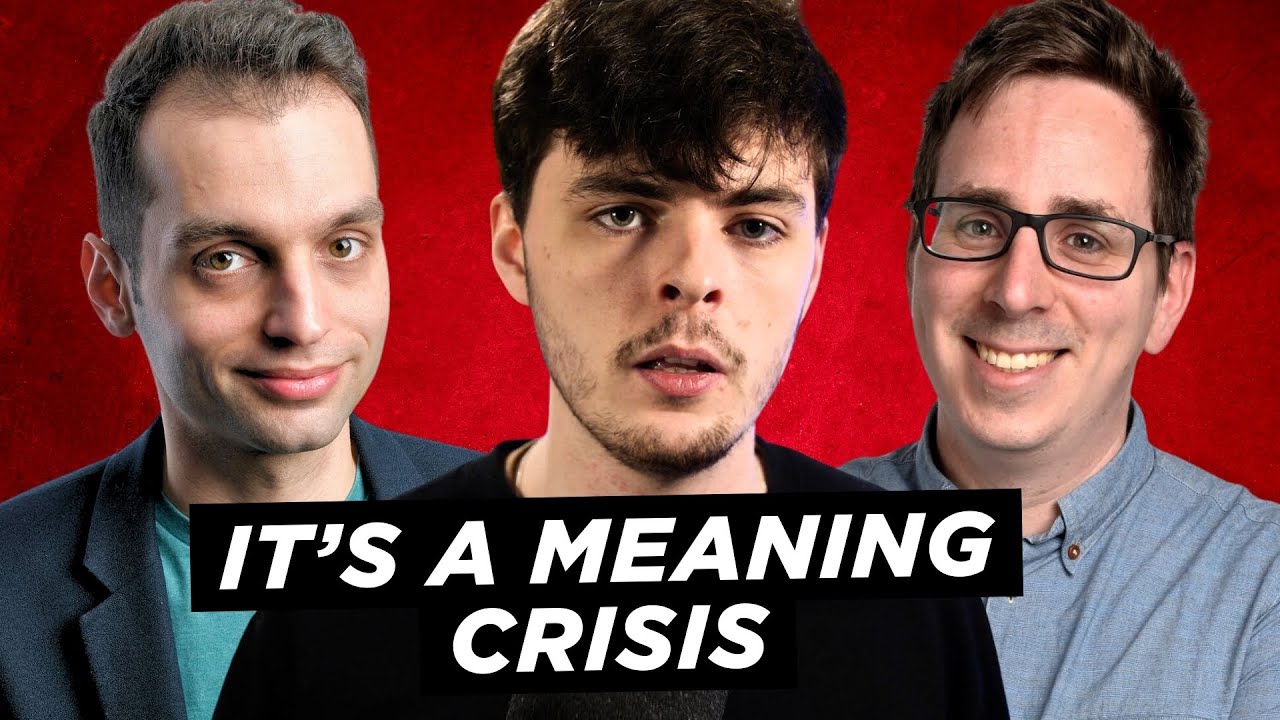
Meaning, Religion and Truth — A Christian Reacts (to Alex O'Connor on Triggernometry)
SUMMARY
Glenn from Speak Life discusses the meaning crisis, the decline of Christianity’s narrative in the West, and a conversation between Alex O’Connor (Cosmic Skeptic) and the Trigonometry hosts, Francis Foster and Constantine Kissin.
IDEAS:
- Replacing God’s image with animalistic identity triggers a thirst for narrative.
- Emotions often masquerade as moral and ethical reasoning.
- The absence of grand narratives leads to societal meaninglessness.
- Different audiences intersect over the shared meaning crisis concern.
- Christianity’s retreat from public life has left a contested space.
- Religious communities reportedly cope better with crises like pandemics.
- Studies suggest religion, especially Christianity, benefits mental health.
- Evolutionary theory posits religion’s survival advantage for societies.
- The death of God concept correlates with societal upheaval and meaninglessness.
- Atheists struggle to reconcile the utility of religion with its truthfulness.
- The dilemma of teaching children beliefs one considers untrue arises.
- Secular humanism faces contradictions between equality and natural selection.
- The West’s cognitive dissonance lies in valuing human rights without religious basis.
- Christianity’s influence is deeply woven into Western societal structures.
- The concept of divine humility is unique to Christianity’s narrative.
- Atheism’s deterministic view challenges the existence of free will and truth.
- Radical emotivism suggests our rationality is heavily influenced by emotions.
- The hunger judge phenomenon illustrates emotion’s impact on decision-making.
- The law of non-contradiction is questioned as a product of emotive response.
- The idea that individuals can create their own meaning is debated.
- Christianity offers a story where even passive suffering can be meaningful.
INSIGHTS:
- Thirst for narrative reflects a deep-seated need for purpose beyond survival.
- Societal meaninglessness arises when grand narratives are discarded.
- Religion’s survival advantage suggests an innate human need for belief systems.
- Teaching children unbelieved truths highlights the conflict between utility and authenticity.
- Christianity’s narrative uniquely offers divine humility and communal equality.
- Emotions significantly influence what we perceive as rational decisions.
- The hunger judge phenomenon underscores the non-rational basis of ethics.
- Questioning foundational logic reveals the emotive underpinnings of philosophy.
- The debate on self-created meaning exposes the need for an external purpose framework.
- Christianity’s story provides a context where passive experiences gain significance.
QUOTES:
- “So much of what we think is emotion, moralizing is emotion, ethics is expression of emotion."
- "No such thing as Freedom, no such thing as truth, no such thing as goodness."
- "Religious communities coped better with the pandemic."
- "Religion confers all these benefits and it’s hard to account for why this would be the case if it were not true."
- "We are religious animals seeking Transcendence."
- "I’m not going to teach my kids about God because I don’t think it’s true."
- "Secular humanism faces contradictions between equality and natural selection."
- "Christianity’s influence is deeply woven into Western societal structures."
- "The concept of divine humility is unique to Christianity’s narrative."
- "Atheism’s deterministic view challenges the existence of free will and truth."
- "Radical emotivism suggests our rationality is heavily influenced by emotions."
- "The hunger judge phenomenon illustrates emotion’s impact on decision-making."
- "The law of non-contradiction is questioned as a product of emotive response."
- "You can’t just make up your own meaning; you have to discover a meaning that’s already there."
- "Christianity offers a story where even passive suffering can be meaningful.”
HABITS:
- Seeking narratives that provide a sense of purpose beyond mere survival instincts.
- Engaging in discussions that explore the intersection of different worldviews.
- Reflecting on the societal implications of religion’s decline in public life.
- Considering the utility versus truthfulness dilemma when discussing beliefs with children.
- Embracing Christian values woven into societal structures despite secular beliefs.
- Acknowledging emotions’ significant role in decision-making processes.
- Being aware of how physical states like hunger can affect ethical judgments.
- Questioning foundational logical principles from an emotive perspective.
- Debating the possibility and validity of creating one’s own meaning in life.
- Finding significance in passive experiences through a greater narrative context.
FACTS:
- Religious communities reportedly cope better with crises like pandemics.
- Studies suggest religion, especially Christianity, benefits mental health.
- Evolutionary theory posits religion’s survival advantage for societies.
- The death of God concept correlates with societal upheaval and meaninglessness.
- Atheists struggle to reconcile the utility of religion with its truthfulness.
- Secular humanism faces contradictions between equality and natural selection.
- Christianity’s influence is deeply woven into Western societal structures.
- The concept of divine humility is unique to Christianity’s narrative.
- Atheism’s deterministic view challenges the existence of free will and truth.
- Radical emotivism suggests our rationality is heavily influenced by emotions.
REFERENCES:
- John Vervaeke
- Alex O’Connor
- Francis Foster
- Constantine Kissin
- Richard Dawkins
- The Handbook of Religion and Health
- Brad Wilcox
- David Sloan Wilson
- Jonathan Haidt
RECOMMENDATIONS:
- Explore narratives that provide deeper purpose beyond mere survival instincts.
- Engage in discussions about different worldviews to understand societal issues.
- Reflect on religion’s role in public life and its impact on societal values.
- Consider utility versus truthfulness when teaching beliefs to future generations.
- Embrace values woven into society despite personal secular or religious beliefs.
- Acknowledge emotions’ role in decision-making to improve ethical judgments.
- Be aware of physical states like hunger affecting judgments and ethical decisions.
- Question foundational logical principles from an emotive perspective for clarity.
- Debate creating one’s own meaning versus discovering an existing greater narrative.
- Find significance in passive experiences through a greater narrative context.