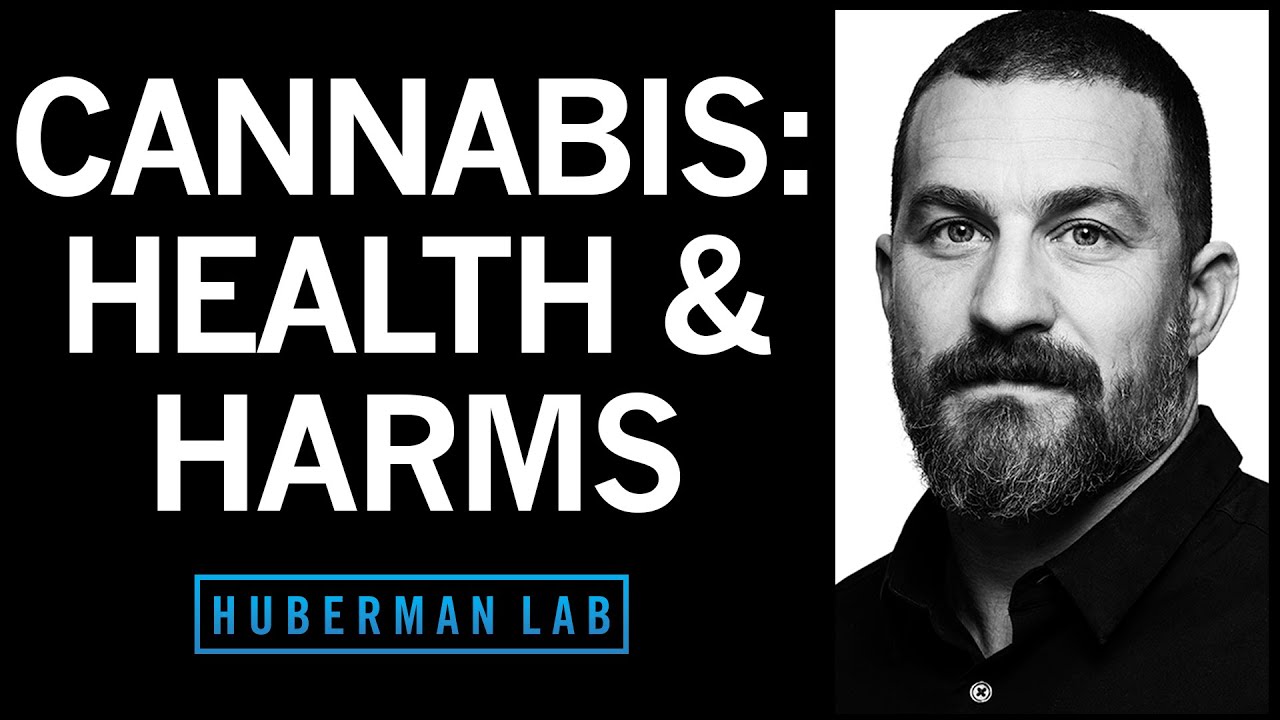
The Effects of Cannabis (Marijuana) on the Brain & Body | Huberman Lab Podcast #92
SUMMARY
Andrew Huberman discusses the profound impact of cannabis on the brain and body, exploring THC, CBD, and various strains, their medicinal applications, potential health hazards, and effects on creativity, anxiety, depression, sex differences, and thinking modes.
IDEAS:
- Cannabis contains compounds impacting brain and body profoundly.
- THC and CBD are well-known cannabis compounds with distinct effects.
- Different cannabis strains produce varied psychoactive and bodily responses.
- Legal status of cannabis varies globally, affecting its use and research.
- Cannabis can be beneficial for some ailments but dangerous for others.
- Specific cannabis compounds can influence creativity and modes of thinking.
- Sex differences exist in cannabis reactions between women and men.
- Cannabis use in pregnancy is alarmingly high, posing developmental risks.
- Chronic cannabis use can increase anxiety and depression over time.
- Early cannabis use significantly raises the risk of later psychosis.
- Cannabis potency correlates with mental health disorders and addiction.
- Smoking or vaping cannabis harms endothelial cells and overall health.
- Cannabis impacts hormones like prolactin, dopamine, and testosterone.
- Adolescent cannabis use accelerates prefrontal cortex thinning detrimentally.
- Public perception of cannabis safety influences its widespread use among youth.
- Cannabis legalization discussions often overlook potential negative effects.
INSIGHTS:
- Cannabis’s diverse effects stem from its interaction with brain receptors.
- Legalization trends may obscure the nuanced risks of cannabis consumption.
- The developing brain is particularly vulnerable to cannabis-induced changes.
- Societal views on cannabis safety can lead to increased youth consumption.
- Cannabis’s impact on creativity is mediated by personality traits like openness.
QUOTES:
- “Cannabis includes many different compounds that have profound impact on the brain and body."
- "Different types or strains of cannabis, including sativa strains and indica strains, have distinct effects."
- "The legality of cannabis varies tremendously depending on where you are in the world."
- "Certain compounds in cannabis can be extremely dangerous for individuals with a genetic propensity for psychosis."
- "Cannabis can impact the way that we think, the types of memory systems we can access, and what’s called convergent and divergent thinking."
- "The cannabis plant has over 70 different psychoactive compounds."
- "THC is largely responsible for the psychoactive effects of cannabis."
- "CBD is known to be used for pain management, anxiety management, and other medicinal purposes."
- "The sativa varieties tend to make people feel invigorated and somewhat alert."
- "Indica varieties lead to more full-bodied effects and are often prescribed for relaxation and sleep."
- "Hybrid strains of marijuana give rise to very nuanced and distinct effects on brain and body."
- "Type one, type two, and type three strains have varying amounts or ratios of THC to CBD."
- "Endogenous cannabinoids are released from neurons and play a role in mood, appetite, etc."
- "Cannabis binds to cannabinoid receptors with much greater affinity than endogenous cannabinoids."
- "Chronic use of cannabis can lead to dependence and disrupted mood and brain state."
- "Cannabis reaches peak concentrations in the brain within 30 to 60 minutes after ingestion."
- "Regular blood work is important as many factors impacting health can only be analyzed with a quality blood test."
- "Cannabis potency is associated with mental health disorders and addiction.”
HABITS:
- Regularly reading from specific research papers to dig into methodology.
- Hosting regular AMAs to answer questions about science-based tools.
- Using Non-Sleep Deep Rest protocols for relaxation and recovery.
- Monitoring blood glucose levels to understand dietary impacts on health.
- Taking custom nootropics tailored for specific cognitive needs.
- Analyzing blood and DNA data for personalized nutrition plans.
- Engaging in NSDR practices to enhance sleep quality and reduce anxiety.
- Supporting research aimed at developing protocols for mental health.
- Utilizing continuous glucose monitoring for dietary feedback.
- Designing custom nootropics for individual cognitive goals.
FACTS:
- Cannabis use in pregnancy reported by 15% of mothers poses developmental risks.
- Chronic cannabis use increases anxiety and depression over time.
- Early cannabis use significantly raises later psychosis risk.
- Smoking or vaping cannabis harms endothelial cells regardless of substance.
- Cannabis impacts hormones like prolactin, dopamine, and testosterone.
- Adolescent cannabis use accelerates prefrontal cortex thinning detrimentally.
- Public perception of cannabis safety influences its widespread use among youth.
- Cannabis legalization discussions often overlook potential negative effects.
- Cannabis potency correlates with mental health disorders and addiction.
- Endogenous cannabinoids are critical for every aspect of brain wiring.
REFERENCES:
- Huberman Lab Podcast
- United Nations Office on Drugs and Crime (2019)
- Lancet Psychiatry (2022)
- Translational Psychiatry (2022)
- Virtusan - Hosts NSDR scripts read by Andrew Huberman
- Levels - Continuous glucose monitoring program
- Thesis - Custom nootropics provider
- InsideTracker - Personalized nutrition platform
- Momentous Supplements - Partnered with Huberman Lab Podcast
- Athletic Greens (AG1) - Vitamin mineral probiotic drink
RECOMMENDATIONS:
- Avoid using cannabis during pregnancy due to developmental risks.
- Consider legal implications when discussing cannabis use benefits.
- Acknowledge potential negative effects alongside positive ones in legalization debates.
- Educate youth on risks associated with early cannabis consumption.
- Monitor changes in public perception regarding cannabis safety.
- Support research exploring both benefits and risks of cannabis use.
- Encourage responsible consumption patterns among adult users.
- Address misconceptions about vaping being safer than smoking.
- Promote awareness of cannabis’s impact on mental health disorders.
- Advocate for comprehensive studies on long-term effects of cannabis.