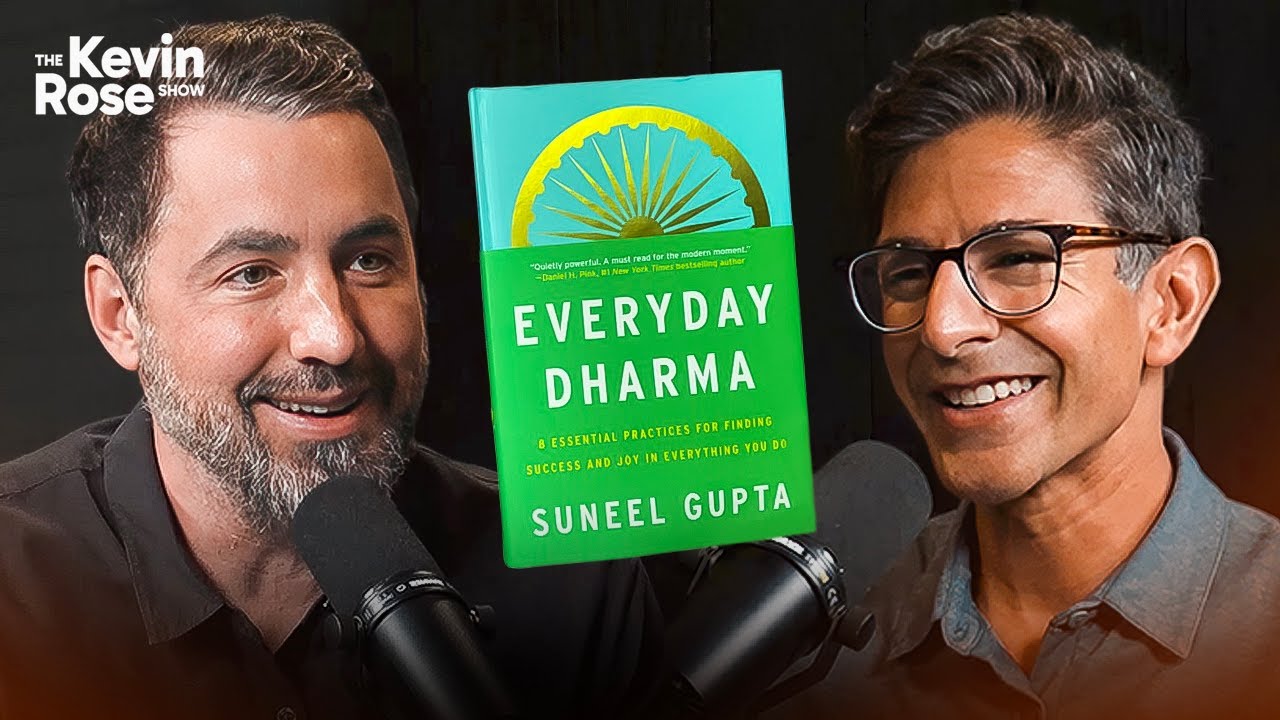
How to Cultivate Everyday Dharma, Suneel Gupta
SUMMARY
Kevin Rose interviews Seil Gupta, a best-selling author and Harvard Medical School visiting scholar, about finding fulfillment, the concept of Dharma, and maintaining energy and purpose in daily life.
IDEAS:
- Success doesn’t guarantee fulfillment; it’s about mindset and daily habits.
- Taking short breaks throughout the day reduces stress and maintains energy.
- Seil Gupta studies leaders to uncover habits that enhance well-being.
- Early failures can be leveraged for learning and future opportunities.
- Personal stories can powerfully connect with audiences and investors.
- Authenticity in communication trumps polished speaking techniques.
- Conviction, not charisma, makes individuals compelling in communication.
- The “arrival fallacy” suggests fulfillment isn’t found in achievements alone.
- Ancient Indian philosophy of Dharma offers insights into modern fulfillment.
- Dharma involves aligning who you are with how you show up in the world.
- Curiosity is a better indicator of passion than competence.
- Small, meaningful daily activities can lead to significant personal growth.
- Energy management is crucial for sustained performance and creativity.
- High performers often take frequent breaks to maintain their energy levels.
- The “555” method involves working 55 minutes, then resting for five.
- Finding comfort in discomfort helps manage life’s inevitable challenges.
- Service to others can be a powerful source of personal fulfillment.
- Switching the spotlight from oneself to others can reduce burnout.
- Recognizing “ember” moments daily can guide one towards their Dharma.
- Embracing cycles of growth and setback is part of the journey to fulfillment.
- The “music mindset” encourages enjoying life’s journey, not just the destination.
INSIGHTS:
- Fulfillment arises from aligning daily actions with deeper purpose, not just success.
- Regular breaks infused with restorative activities enhance productivity and well-being.
- Authentic storytelling connects deeply with audiences, fostering trust and interest.
- Embracing curiosity over competence can lead to discovering one’s true passions.
- Service-oriented mindsets shift focus from personal gain to communal contribution.
QUOTES:
- “Success is a lousy teacher.” - Bill Gates
- ”Long-term success can often come from short-term embarrassment."
- "The best way to find yourself is to lose yourself in the service of others.” - Gandhi
- ”Everybody is going to hurt you; you just have to figure out who’s worth suffering for.” - Bob Marley
- ”In between frustration and response, there is a space… lies your freedom.” - Victor Frankl
- ”Make work your play and play your work.” - Phil Jackson
- ”The music mindset is about enjoying the journey, not just the destination.”
HABITS:
- Taking five to ten-minute breaks throughout the workday to reduce stress.
- Using the “555” method: 55 minutes of work followed by five minutes of rest.
- Scheduling meetings at odd times like 3:05 PM to ensure break time before them.
- Reflecting on small daily moments that bring joy and noting them down.
- Practicing rhythmic renewal by engaging in activities like gardening or walking.
- Flipping the spotlight from oneself to others in moments of frustration.
- Incorporating service to others as a daily practice for personal growth.
- Embracing cycles of growth and setbacks as part of the personal journey.
FACTS:
- Martha Stewart takes deliberate breaks throughout her day for gardening and horseback riding.
- Microsoft study showed people taking breaks had lower stress levels than those working back-to-back.
- Victor Frankl emphasized the importance of finding space between frustration and response.
- Brian Cranston shifted from trying to get parts to giving something unique in auditions.
- Gandhi overcame his fear of public speaking by focusing on serving others.
REFERENCES:
- Man’s Search for Meaning
- Brian Cranston
- Gandhi
- Martha Stewart
- Phil Jackson
- Microsoft study on breaks and stress levels
RECOMMENDATIONS:
- Practice the “555” method to balance work intensity with restorative breaks.
- Schedule meetings with intentional gaps to encourage mental refreshment.
- Note daily moments that spark joy or curiosity to identify patterns of passion.
- Engage in rhythmic renewal activities that resonate personally for rejuvenation.
- Flip the spotlight from self to others to cultivate service-oriented mindsets.