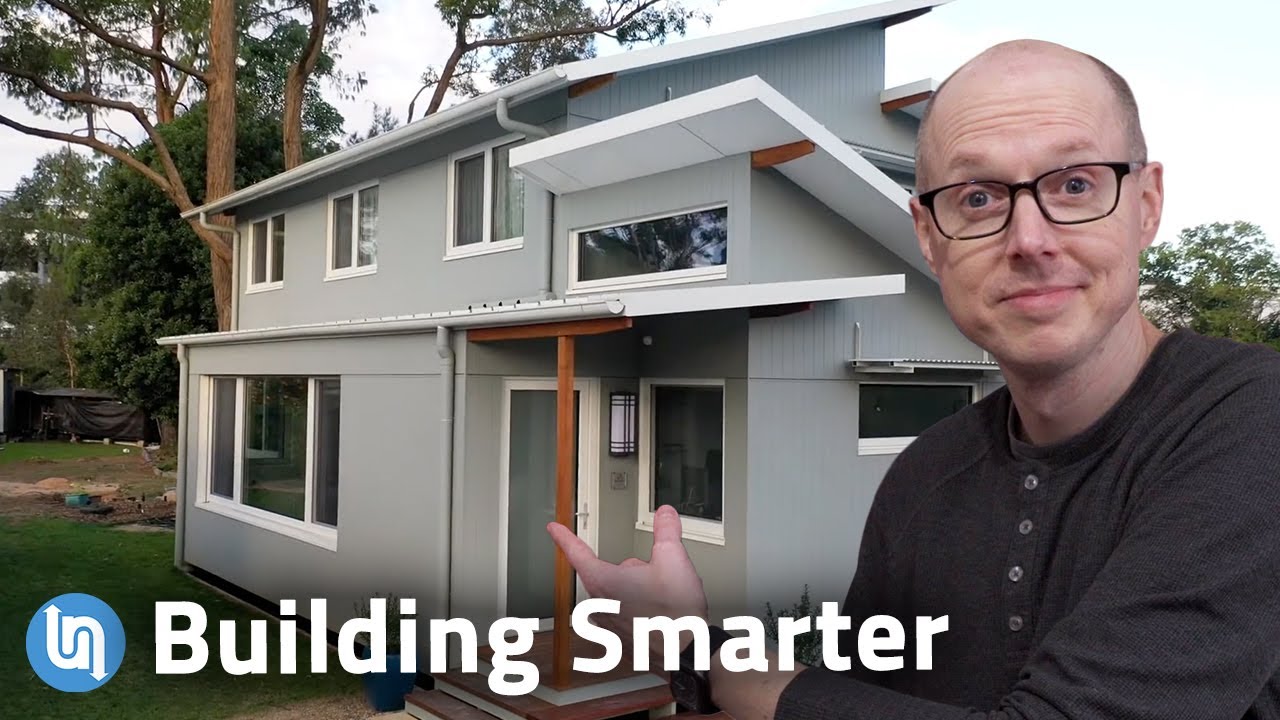
Exploring Passive House Design - 90% Energy Savings!
SUMMARY
Matt Ferrell from “Undecided” explores Passive Houses, energy-efficient homes that can significantly reduce energy consumption and costs.
IDEAS:
- Passive Houses use up to 90% less energy than conventional homes.
- Solar panels combined with Passive House design can minimize annual energy costs.
- The Passive House Institute in Germany set standards for low-energy houses in 1996.
- Five principles guide Passive House design: insulation, thermal bridge free, optimized orientation, airtight envelope, mechanical ventilation.
- High-performance insulation materials include sheep’s wool and silos.
- Thermal bridges are minimized to prevent heat escape and moisture issues.
- Triple-pane windows and insulated frames are used for temperature control.
- Passive solar heating optimizes natural light and heat from the sun.
- Airtight envelopes improve comfort and air quality by preventing mold growth.
- Mechanical ventilation systems ensure fresh air while maintaining energy efficiency.
- Energy Recovery Ventilators (ERVs) are preferred in humid climates for moisture control.
- Passive Houses require significantly less heating energy than typical homes.
- Passive House certification focuses on performance-based energy efficiency.
- Retrofitting existing buildings to Passive House standards is possible with EnerPHit certification.
- The cost of building a Passive House is estimated to be 5-15% more than a conventional house.
- Long-term savings from energy efficiency can offset the initial higher construction costs.
- Innovations like warm edge spacers and straw panels improve Passive House components.
- Over 25,000 certified Passive Houses existed as of January 2020.
- Governments offer grants, tax breaks, and loans for energy-saving home improvements.
- Combining Passive House techniques with solar panels can achieve net-zero energy homes.
- A Massachusetts family pays just over $400 a year for energy in their net-zero home.
INSIGHTS:
- Energy-efficient homes like Passive Houses can drastically cut household carbon footprints.
- Initial higher costs of Passive Houses are balanced by long-term energy savings.
- Passive House design principles can be applied to retrofit existing buildings sustainably.
- Government incentives support the transition to energy-efficient housing solutions.
- Combining renewable energy sources with efficient design leads to net-zero homes.
- Innovations in building materials enhance the sustainability of Passive Houses.
- The global adoption of Passive Houses contributes to climate change mitigation efforts.
- Energy conservation in housing is as crucial as clean energy generation for sustainability.
- Mechanical ventilation in airtight homes ensures health benefits alongside energy savings.
- The growing number of Passive Houses indicates a shift towards sustainable living practices.
QUOTES:
- “Passive Houses rely on five main principles."
- "Quality insulation is fundamental to achieving great performance of a Passive House design."
- "Heat likes to escape to where it’s colder."
- "Passive solar heating has to be tightly managed."
- "An airtight envelope brings some problems like fresh air for breathing."
- "Mechanical ventilation systems… provide continuous filtered fresh air."
- "In summers the system conditions incoming warm humid air."
- "A passive house needs just 15 kilowatt hours of heating energy per square meter per year."
- "Passive house is just a performance-based energy efficiency design standard."
- "The cost of building a Passive House is estimated to be 5-15% more than a conventional house."
- "Long-term savings from energy efficiency can offset the initial higher construction costs."
- "Innovations like warm edge spacers and straw panels improve Passive House components."
- "Over 25,000 certified Passive Houses existed as of January 2020."
- "Combining some passive house techniques with solar panel installations… it’s possible to achieve a net zero pretty easily."
- "One family in Massachusetts… pay a little over $400 a year for energy use.”
HABITS:
- Prioritize high-quality insulation in home construction for energy efficiency.
- Design homes with minimal thermal bridges to prevent heat loss and moisture issues.
- Use triple-pane windows and insulated frames for better temperature control.
- Optimize home orientation for passive solar heating and natural light harvesting.
- Seal all potential leaks in the home’s envelope to maintain airtightness.
- Install mechanical ventilation systems for fresh air in airtight living spaces.
- Choose Energy Recovery Ventilators in humid climates for moisture and heat transfer.
- Consider long-term energy savings when evaluating higher initial construction costs.
- Stay informed about innovations in sustainable building materials and techniques.
- Explore government incentives for installing energy-saving materials in homes.
- Aim for net-zero energy consumption by combining efficient design with solar panels.
- Regularly maintain mechanical ventilation systems for optimal performance and air quality.
FACTS:
- The Passive House Institute was established in Darmstadt, Germany, in 1996.
- Passive Houses can save up to 90% on heating and cooling compared to conventional homes.
- Triple glazed windows use inert gas like argon to reduce heat transfer.
- Heat Recovery Ventilators (HRVs) and Energy Recovery Ventilators (ERVs) are used in Passive Houses.
- Northern European passive houses require only 15 kWh/m²/year for heating.
- EnerPHit certification is used for retrofitting buildings to Passive House standards.
- The Cooper Foundation helps children with special needs through fundraising efforts.
- SWISSPACER warm edge spacers reduce gas losses and extend window service life.
- Ecococoon straw panels resist fire for 120 minutes despite being made of straw.
- As of January 2020, there were over 25,000 certified Passive Houses worldwide.
REFERENCES:
- Matt Ferrell
- Passive House Institute
- Darmstadt, Germany
- ”Undecided” episode on Passive Houses
- The Cooper Foundation
- SWISSPACER
- Ecococoon
- Triple-pane windows
- Energy Recovery Ventilators (ERVs)
- Heat Recovery Ventilators (HRVs)
- EnerPHit certification
- PASSIPEDIA
RECOMMENDATIONS:
- Consider building or retrofitting your home to Passive House standards for energy savings.
- Explore government incentives for energy-efficient home improvements in your area.
- Use high-performance insulation materials like sheep’s wool for eco-friendly construction.
- Design your home with an optimized orientation for passive solar heating benefits.
- Install triple-pane windows with insulated frames for better home temperature control.
- Seal potential leaks in your home’s envelope to maintain an airtight environment.
- Choose mechanical ventilation systems that provide fresh air without losing energy efficiency.
- Opt for Energy Recovery Ventilators in humid climates to manage moisture effectively.
- Evaluate long-term cost savings when considering the investment in a Passive House.
- Stay updated on sustainable building material innovations like warm edge spacers.