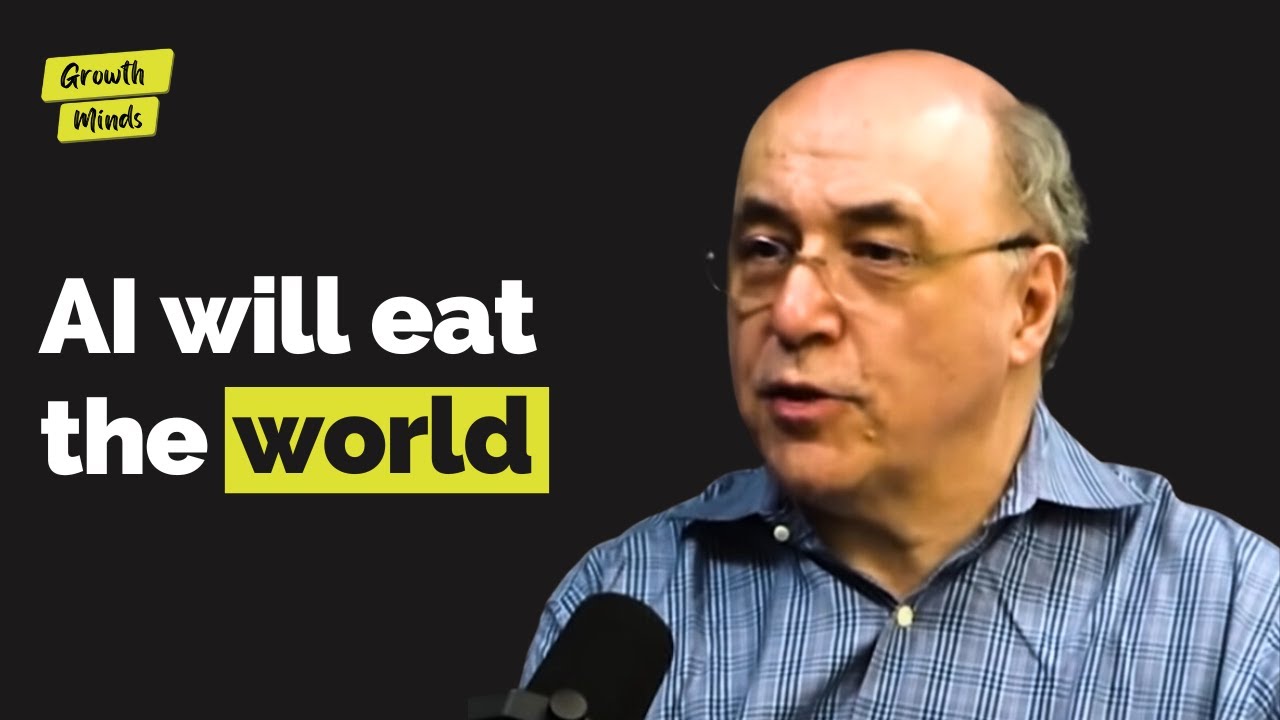
THE BIG AI RESET: Get AHEAD Of 99% Of People (Prepare Now) | Stephen Wolfram
SUMMARY:
Steven Wolfram, a computer scientist, mathematician, theoretical physicist, and author, discusses AI ethics, the impact of technology on society, and his personal journey from a prestigious education to founding Wolfram Research. He reflects on the role of AI in the future, the importance of asking the right questions, and the human condition in relation to technological progress.
IDEAS:
- Steven Wolfram emphasizes the importance of asking meaningful questions.
- AI ethics is a complex field with many unclear aspects.
- Technology has been the main driver of human progress historically.
- Human fulfillment may increase as automation takes over mundane tasks.
- The future could see humans focusing more on uniquely human activities.
- Wolfram’s personal journey involved skipping traditional education milestones.
- He believes in automating as much as possible to leverage human ideas.
- Wolfram is optimistic about the future’s potential for intellectual discovery.
- The human condition remains constant despite technological advancements.
- Education should focus more on teaching how to think rather than what to think.
INSIGHTS:
- Human fulfillment is linked to engaging in uniquely human tasks.
- Technological progress does not fundamentally alter the human condition.
- The future may involve more thinking and less mechanical work for humans.
- Education systems should adapt to foster independent thinking skills.
- AI’s role in society will be shaped by human-directed goals and values.
QUOTES:
- “The big story is what questions should we ask, not let’s figure out the mechanics."
- "By the time you’ve been spending 30 years doing the thing you didn’t want to do, you’re burnt out."
- "The most important step is how do you take an idea and formalize it."
- "We humans are getting to do what we humans are good at."
- "The future could see humans focusing more on uniquely human activities."
- "The human condition remains constant despite technological advancements."
- "Education should focus more on teaching how to think rather than what to think."
- "AI ethics is a complex field with many unclear aspects."
- "Technology has been the main driver of human progress historically."
- "Human fulfillment may increase as automation takes over mundane tasks.”
HABITS:
- Steven Wolfram writes extensively on various topics online.
- He engages in live streaming to share his work and ideas.
- Wolfram focuses on automating tasks to increase productivity.
- He prioritizes asking meaningful questions in his work.
- Wolfram values intellectual discovery and aesthetic experiences.
- He maintains an optimistic outlook on future technological impacts.
- Wolfram avoids spending money unnecessarily to maintain financial health.
- He believes in aligning personal interests with professional activities.
- Wolfram encourages thinking broadly and pulling ideas from different domains.
- He practices explaining complex ideas clearly to others.
FACTS:
- Steven Wolfram founded Wolfram Research after a prestigious education.
- He believes AI will increasingly automate mundane tasks in society.
- Wolfram Research has automated tasks typically done by larger companies.
- Wolfram’s personal wealth allows him to fund projects he’s interested in.
- He views money as a tool rather than a primary motivator for success.
- Wolfram sees education as needing to teach students how to ask questions.
- He predicts that humans will focus more on thinking tasks in the future.
- Wolfram suggests that AI will not fundamentally change the human condition.
- He believes that humans will always direct AI towards their own goals.
- Wolfram is optimistic about humanity’s ability to leverage technology.
REFERENCES:
- Steven Wolfram
- A New Kind of Science
- Wolfram Research
- Eton College
- Oxford University
- Rutherford Laboratory
- Caltech
- Institute for Advanced Study
- Princeton University
- CERN
RECOMMENDATIONS:
- Embrace technology but maintain focus on uniquely human skills.
- Foster independent thinking skills through education reform.
- Automate mundane tasks to increase time for fulfilling activities.
- Engage with AI ethically, considering broader societal impacts.
- Pursue intellectual interests that align with personal values.
- Maintain financial health by spending less than you earn.
- Use money as a tool for achieving personal and professional goals.
- Encourage broad thinking and interdisciplinary learning approaches.
- Value intellectual discovery and aesthetic experiences in life.
- Stay optimistic about leveraging technology for positive change.